Hardware + software · 2026
IoT remote control — a master and slave link for devices that were never networked
A master and slave wireless link that lets a control centre drive field devices that were never networked: command downlink, status uplink, cloud configuration over 4G, and a deterrent family that plugs into the same link.
The situation
Field equipment is usually installed with a local control box and nothing else: a switch, maybe a dry contact, sometimes a serial port used once at commissioning and never again. The equipment is expected to keep working for a decade, and the organisation that owns it wants to command it from a control centre and, more importantly, to know whether it did what it was told.
Replacing that equipment to get connectivity is rarely justified. The units are still functional, they are outdoors, they are spread over a site or a region, and the replacement cost is in the installation labour rather than the electronics.
The call we made
Integrate the device that exists, not the device you wish existed. The product starts from an interface retrofit: a control board that presents the local commands and reads the local status of the equipment, keeping the original device in place. That framing decides the whole design — the board must tolerate the voltages, the isolation and the noise of an installation that was never designed to be networked, and it must fail in a way that leaves the device operable by hand.
Two stages, master and slave. The master sits at the site where there is power and a 4G signal; the slave sits at the device and is a simplified version of the same architecture, so firmware, interface handling and diagnostics carry across rather than being two separate designs. This split exists for two practical reasons: coverage, since the device is often not where the signal is, and serviceability, since either stage can be replaced without disturbing the other.
Cloud configuration is the commercial feature. Parameters, thresholds and rules are set centrally rather than at the device. In this kind of deployment a commissioning visit costs more than the electronics, and a control scheme whose logic only changes when someone drives to the site is a control scheme that never changes. It also means the same hardware serves installations with different local rules.
Uplink the execution result, not just the command acknowledgement. The value of remote control is not sending the command; it is knowing that the device moved. State and execution results return to the control centre or host system, so an operator can see the difference between a command sent, a command received and a command carried out. Without that, operators stop trusting the remote path and drive to the site anyway, which removes the point of the system.
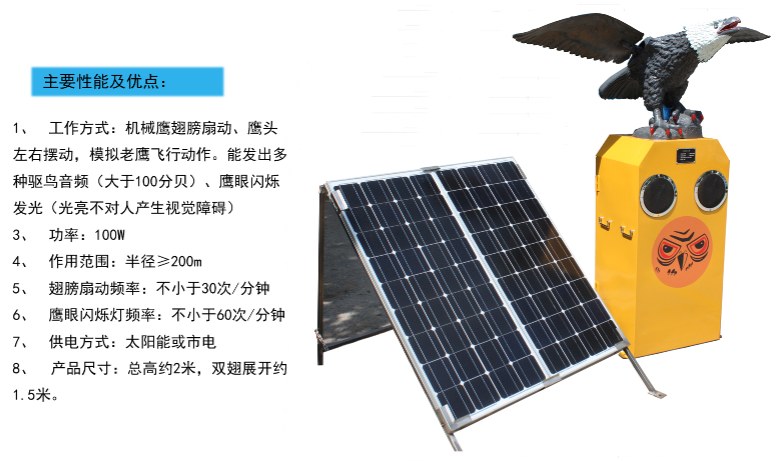
Build it as a family, because deterrence is the other half. The same link commands deterrent devices — gas cannon in straight and reducing-bore forms, solar sonic units with wing motion, audio above 100 dB and visible eagle-eye lighting — so that a detection system, a control link and a deterrent are one system rather than three vendors arguing at the fence line. Grouping also means one set of spares and one commissioning procedure.
Say what stage it is at. The hardware capability is held jointly by our core team and long-term technical partners: cooperative, not a proprietary product line. The master completed initial prototype development and testing in March 2026; the slave is a simplified, same-architecture version. This is a prototype programme, not a stocked catalogue item, and we state that before the specification.
What we built
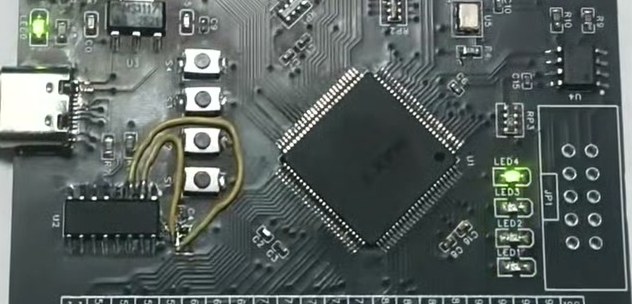
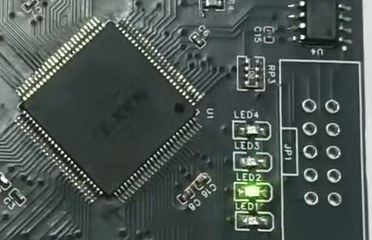
- Master unit — control board with a link interface, local status indication through four LEDs and button operation, packaged for site installation.
- Slave unit — a simplified version of the same architecture at the device end, plus an interface retrofit path for devices that were never networked.
- Networking — wireless grouping of controlled devices, command downlink from the control centre, status and execution results uplink, 4G range within coverage.
- Cloud configuration and management — parameters and rules set centrally, no on-site configuration session required.
- Interoperability — grouping with radar, photoelectric and deterrent devices, with the interface defined once so a new device type is an adapter rather than a redesign.
- Deterrent family — gas cannon and solar sonic units that accept commands from the same link.
Result
The prototype demonstrates the full path: a command from the control centre reaches a remote device, the device acts, and the result comes back to be seen. The interface retrofit approach means that path can be added to installed equipment without replacing it.
The honest limits: availability depends on 4G coverage at the site, so a site without it needs a different link and a different design; the retrofit is per device type and is real engineering, not a plug; and radio transmission and installation practice bring approvals and electrical safety questions that must be settled with the technical partners and the site before a proposal becomes a commitment.
Technology
| Stack | 4G link · Master/slave radio · Embedded control · Cloud configuration · Status indicators |
|---|---|
| Delivery model | Cooperative capability: master prototype built and tested |
| Client | Control-centre operators with installed field equipment |
| Status | MVP / pilot |
What we cannot show
Hardware capability held jointly with long-term technical partners: cooperative, not a proprietary product line. The master is a prototype, not a stocked product; the slave is a simplified version of the same architecture.
Similar problem?
If this looks like something you are dealing with — a legacy system that must keep running, a workflow no product covers, an integration nobody wants to touch — send a short description. We will tell you honestly whether we are the right team, and what the first two weeks would look like.