Hardware + software · 2026
Spare board repair and domestic re-design for legacy electronics
Component-level repair of failed boards and domestic re-manufacture of obsolete assemblies: reverse engineering, fault search down to the device, and acceptance only once the board is running in the original system again.
The situation
Equipment that is still doing its job, with electronics that are no longer made, produces a specific kind of problem. A board fails, the original supplier has stopped producing it or stopped existing, and the choice offered is usually between buying a whole replacement system and keeping a dead rack.
Repair and re-manufacture are the two middle options. Repair keeps the original board alive. Re-manufacture produces a new board that fits the old slot. Both require the same thing first: understanding a design that nobody documented, from the object itself.
The call we made
After the reverse engineering, design forward — do not clone. This is the decision that shapes the whole service. A faithful copy inherits the original component choices, including the discontinued parts that caused the problem, and often the original process assumptions as well. The result works today and is unfundable again in three years.
Once the function, the interfaces and the specifications are understood, the board can be designed again on current parts, with current processes and with an eye on long-term availability. The constraints that must be preserved are the external ones: the interface, the connector, the mounting, the envelope, the signals the system expects. Everything behind that boundary is a free choice, and it should be exercised. That is how a re-manufactured assembly ends up more maintainable than the original, rather than equally obsolete.
Two paths, selected by the requirement. Where the requirement is to keep running, the shorter path is a partial re-version: replace the stopped devices, keep the design, fix the specific problem, add monitoring or self-test or remote configuration if it comes almost free. It is the lowest-risk, shortest-cycle option. Where the requirement includes long-term support, the forward replacement is the right answer: new design, current devices, preserved interfaces. And they can be sequenced — re-version first to remove the immediate risk, forward replacement as the durable answer. We say which path applies before quoting, because the two have different costs and different lifetimes.
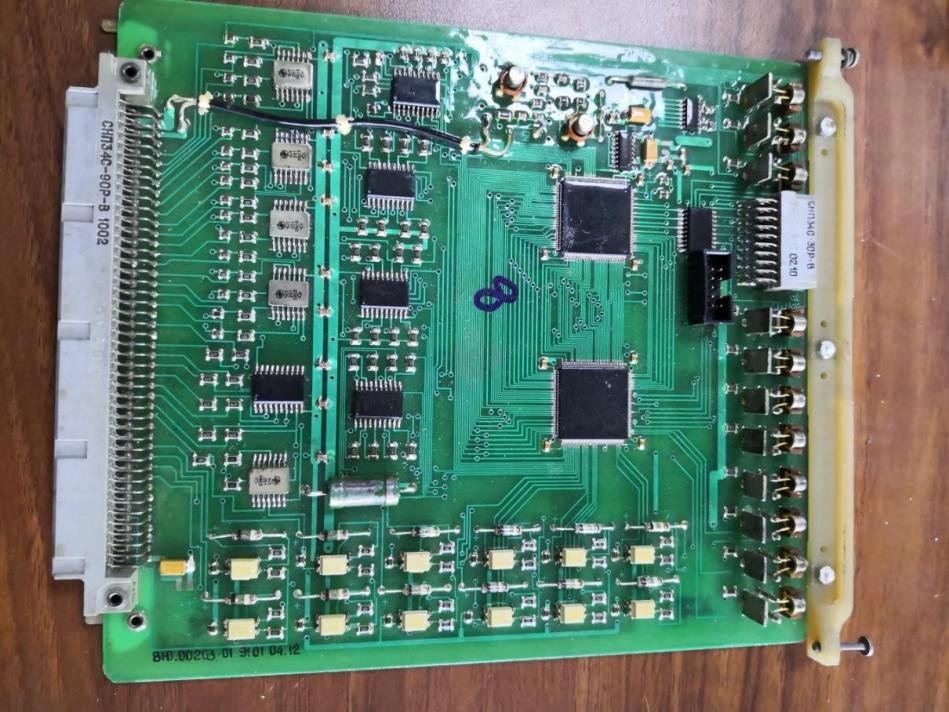
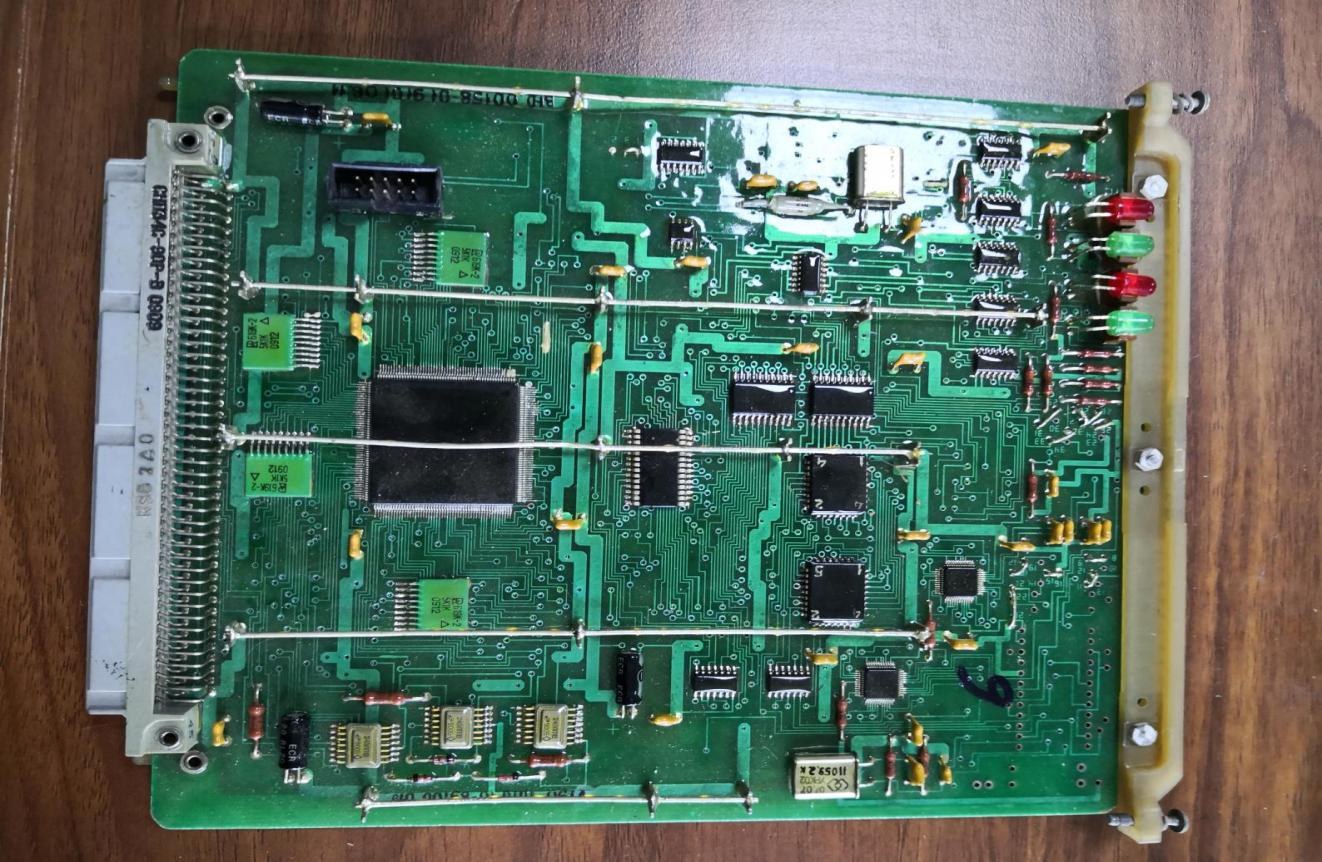
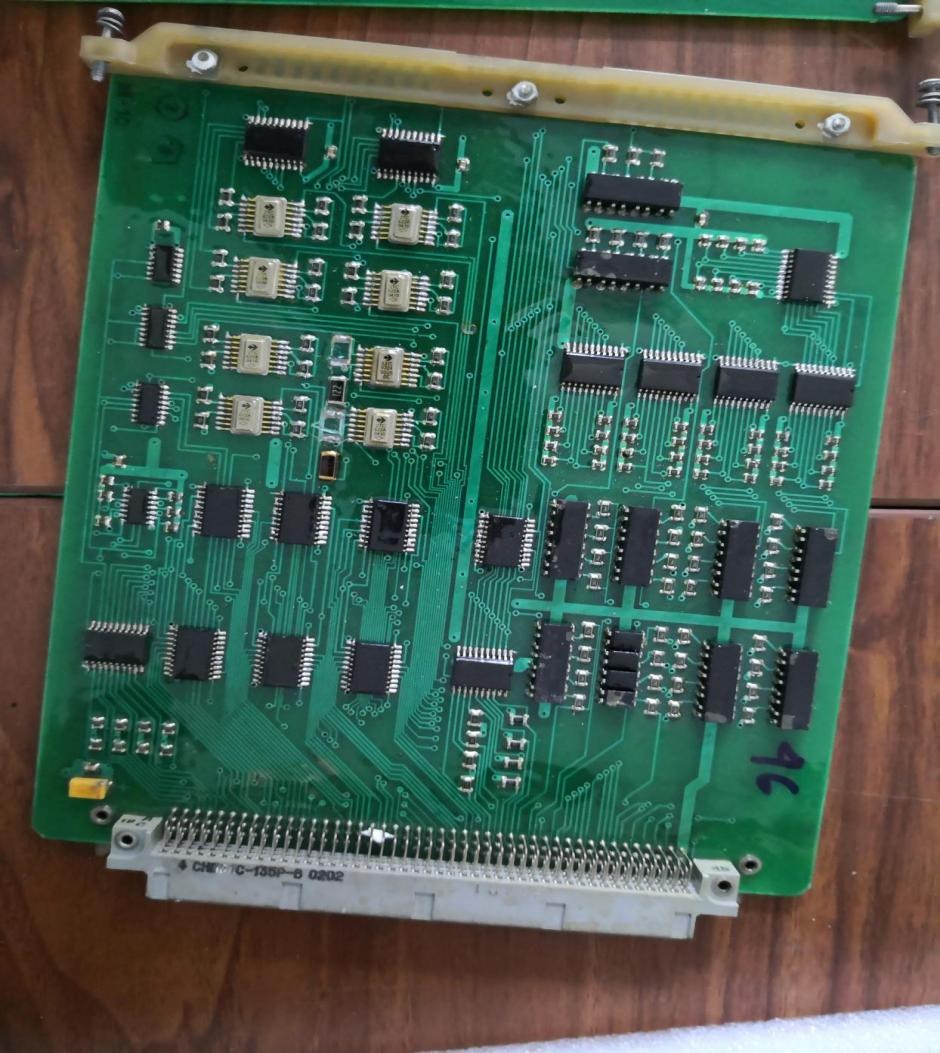
Repair goes to the device, not to the board swap. Where original boards are unavailable or expensive, replacing the assembly is not repair. Fault search works down to component level by isolating functional blocks, and the fix is a device replacement, a flying wire or a re-solder, followed by parameter and waveform re-measurement. Each repair then yields a knowledge entry for the same fault next time, which is what shortens diagnosis across a fleet.
Acceptance means the original system accepts it. A board that powers up on the bench has proved almost nothing. Every repaired or re-manufactured unit goes back into the system for interface testing before it is signed off — function and performance measured in place, not on a test jig with a friendly load. Rejecting bench-only acceptance is the single rule that keeps field failure rates down, and it is non-negotiable in this service.
State the ownership boundary. The hardware capability described here is held jointly by our core team and long-term technical partners. It is a cooperative capability, not a proprietary product line, and commitments on schedule and specification are made per project with those partners. In a domain where a wrong claim is discovered only after a system is down, this matters more than usual.
What we built
The service runs as a six-step closed loop:
- Intake and record — fault symptoms, operating environment, prior repair history.
- Reverse engineering — reconstruct the functional block diagram, establish the signal flow and the list of key nodes.
- Fault localisation — isolate by functional block, narrow to the device.
- Repair — replace, bridge or re-solder, then re-measure parameters and waveforms.
- System verification — refit and test in the original system, function and performance to specification.
- Archive and improve — repair record filed, recurring faults turned into knowledge entries.
On the re-manufacture side the sequence is reverse design, single-unit design and debug, system-level integration, then environmental, vibration and electromagnetic testing — the same gate structure any small production programme needs, at the scale of a spare part.
Result
What the customer gets is a board that fits, a board that the system accepts, and a documented reason it failed. On the re-manufacture path they also get independence from a device that is no longer procurable, at a cost that is measured against the original board rather than against a new system.
The honest limits: this is skilled manual engineering, so throughput is bounded by technicians rather than by machines; the quality of the outcome depends on how much of the original design can be established from the object; and a re-manufactured assembly is a new design with its own qualification evidence, not a certified equivalent of the original. Those three sentences belong in the proposal, not in the appendix.
Technology
| Stack | Reverse engineering · Component-level rework · Flying-wire modification · Instrument measurement · Environmental test |
|---|---|
| Delivery model | Cooperative capability: repair service and re-manufacture |
| Client | Operators of legacy electronic systems |
| Status | Delivered |
What we cannot show
Hardware capability held jointly with long-term technical partners: cooperative, not a proprietary product line. Boards are shown without customer identification; no system, platform or part number is disclosed.
Similar problem?
If this looks like something you are dealing with — a legacy system that must keep running, a workflow no product covers, an integration nobody wants to touch — send a short description. We will tell you honestly whether we are the right team, and what the first two weeks would look like.