Platform & SaaS · 2026
Smart inspection — from sensor event to closed work order
An inspection platform for energy and security sites: device collection, AI detection of defects and violations, automatic work order generation, dispatch and acceptance, plus an Android and iOS client for routes, map tracks and on-site reporting.
The situation
Sites that run inspection patrols have two problems that look like one. The first is coverage: fixed cameras and sensors see a small fraction of the site, and the rest depends on a person walking a route. The second is the record: the walk produces a paper form, and the form is retyped at the office hours later — if it is retyped at all.
Adding AI detection to this picture usually fails for a reason that has nothing to do with model quality. The system produces events. The operations team already has a ticketing process, an on-call rota and an acceptance step. An event that does not become a ticket in that process is a notification that gets ignored, and after a month the detection feature is switched off.
The call we made
Fix the device interface once, at proposal stage. Site device protocols are numerous and on-site networks are unreliable; integration is where these projects lose their schedule. We defined the collected-data interface, the command interface and the failure behaviour once, before implementation, and put every protocol behind one adapter layer. Adding a device type then costs an adapter, not a redesign. The same discipline applies on the delivery side: the platform can ship as software alone, or jointly with the hardware side, and that choice must not change the interface.
An event is not a work order. Detection output enters a rule engine that decides severity, target team and whether a ticket is generated at all. The generated ticket uses the same concepts as the customer’s existing operations flow — owner, deadline, acceptance, evidence — so it can be pushed into an existing OA or maintenance system through an interface rather than replacing it. This is the part that determines whether detection survives contact with operations.
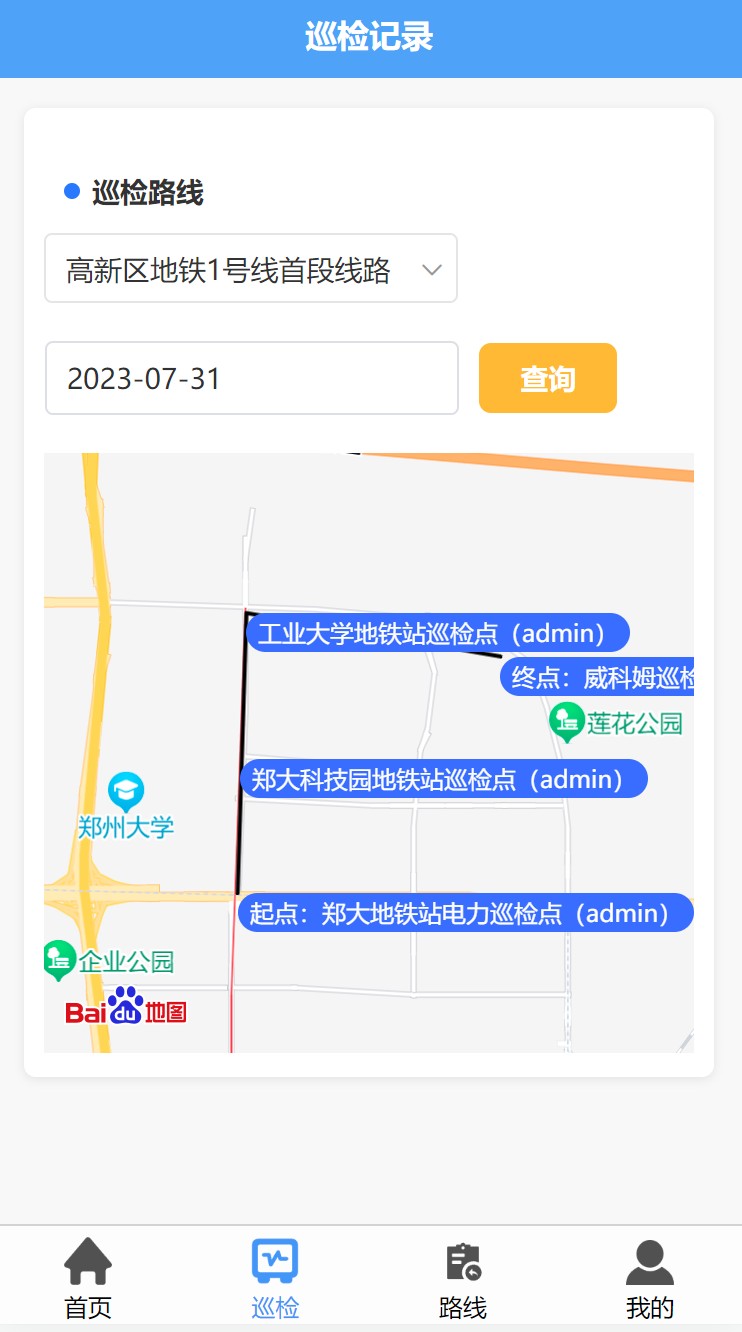
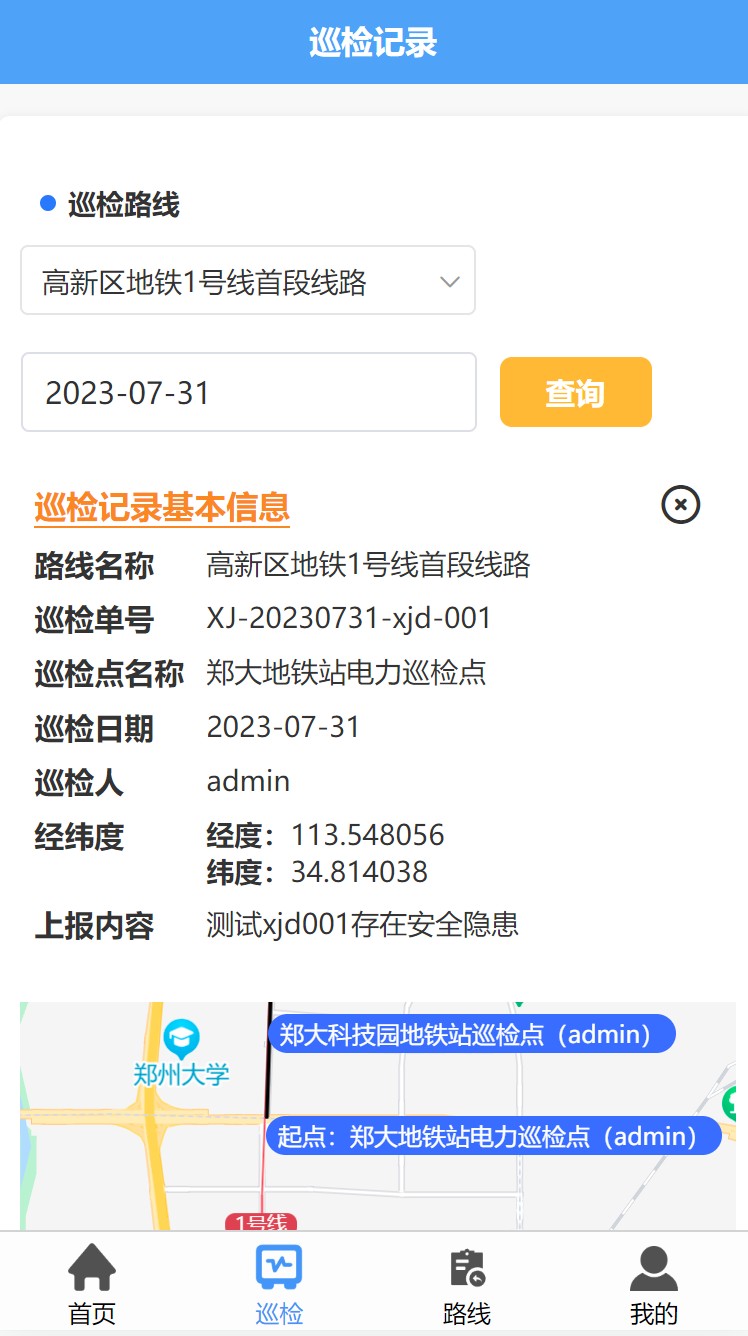
Ship the mobile client, do not defer it. The reason inspection systems quietly die is double entry: a clipboard in the field, a keyboard in the office. The mobile client covers the four things an inspector actually does — select a route for the day and switch between routes, record the track on a map, keep a record detail with task number, point and coordinates, and report an exception from the site, which enters the ticket flow immediately. No second entry.
Tune accuracy per scene and keep a human path. Detection accuracy is a property of a scene: lighting, camera angle, object size, weather. A single global threshold either floods the queue or misses defects, so thresholds are per scene, and each detection type keeps a human review step. False positives are what kill adoption — a queue that is wrong ten percent of the time gets ignored long before it is wrong half the time.
What we built
- Device access and protocol adaptation — cameras and sensors through one collected-data interface.
- AI detection — defects and rule violations, with confidence and evidence.
- Rule engine and work order generation — severity, routing, automatic ticket creation, dispatch, acceptance and close.
- Inspection routes and task scheduling — planned patrols alongside event-driven work.
- Result capture and statistics — handling results fed back from the field, with statistics by area, team and period.
- Mobile client (Android and iOS) — route selection, map track, record detail with coordinates, on-site exception reporting.
Result
Detection now ends in an accepted work order rather than a notification, and the field record is created once, in the field. That closes the loop the operator actually manages: what was found, who owned it, what was done, and what is still open.
The honest scope: this is not a general-purpose vision product. Detection quality is a function of the scene and the training data for that scene, and we state that per deployment rather than as a platform-wide accuracy figure. What generalises is the machinery around the model — device access, rule routing, ticketing, mobile capture — and that is where the reusable engineering is.
Technology
| Stack | Vue 3 · Spring Boot · FastAPI · MySQL · Redis · Docker |
|---|---|
| Delivery model | Delivered platform, mobile client shipped |
| Client | Energy and security site operators |
| Status | Delivered |
Similar problem?
If this looks like something you are dealing with — a legacy system that must keep running, a workflow no product covers, an integration nobody wants to touch — send a short description. We will tell you honestly whether we are the right team, and what the first two weeks would look like.