Custom enterprise software · 2014
National statistics research platform: projects, results, and a citable archive
Platform for commissioning, reviewing and archiving national statistical research: project lifecycle, research journal compilation, member records for researchers and institutions, and a public portal — designed backwards from the published output.
The situation
Every year the statistical research institute inside the national statistics office commissions a large body of research: GDP analysis, population analysis, agricultural analysis, and more. Each piece of work has an owner, a schedule, a mid-term check and a completion review. Each produces something — a paper, a report, a body of findings — and the best of it is compiled into a research journal that is meant to remain available for historical reference and for policy analysis years later.
The institute asked for project management, which is what any organisation asks for when the visible symptom is a queue of projects in trouble. What made this engagement interesting is that project management was the second-most valuable thing they needed.
The call we made
We designed the platform backwards from the published output. The instinct with a research programme is to model the workflow: submission, approval, mid-term report, review, close. Do that and you get a system that manages deadlines and produces a folder of attachments — and five years later nobody can find the paper, and the journal compilation is assembled by asking people to send their files again.
So the archive is the system of record, and the workflow exists to fill it. Every stage produces a versioned artefact that stays addressable: the proposal, the mid-term check, the completion review, the final paper, the journal issue it was published in. A project cannot be marked complete without its citable output attached and described. That single rule — enforced at the point where people are most motivated to close the record — is why the archive is complete afterwards rather than 70 percent complete.
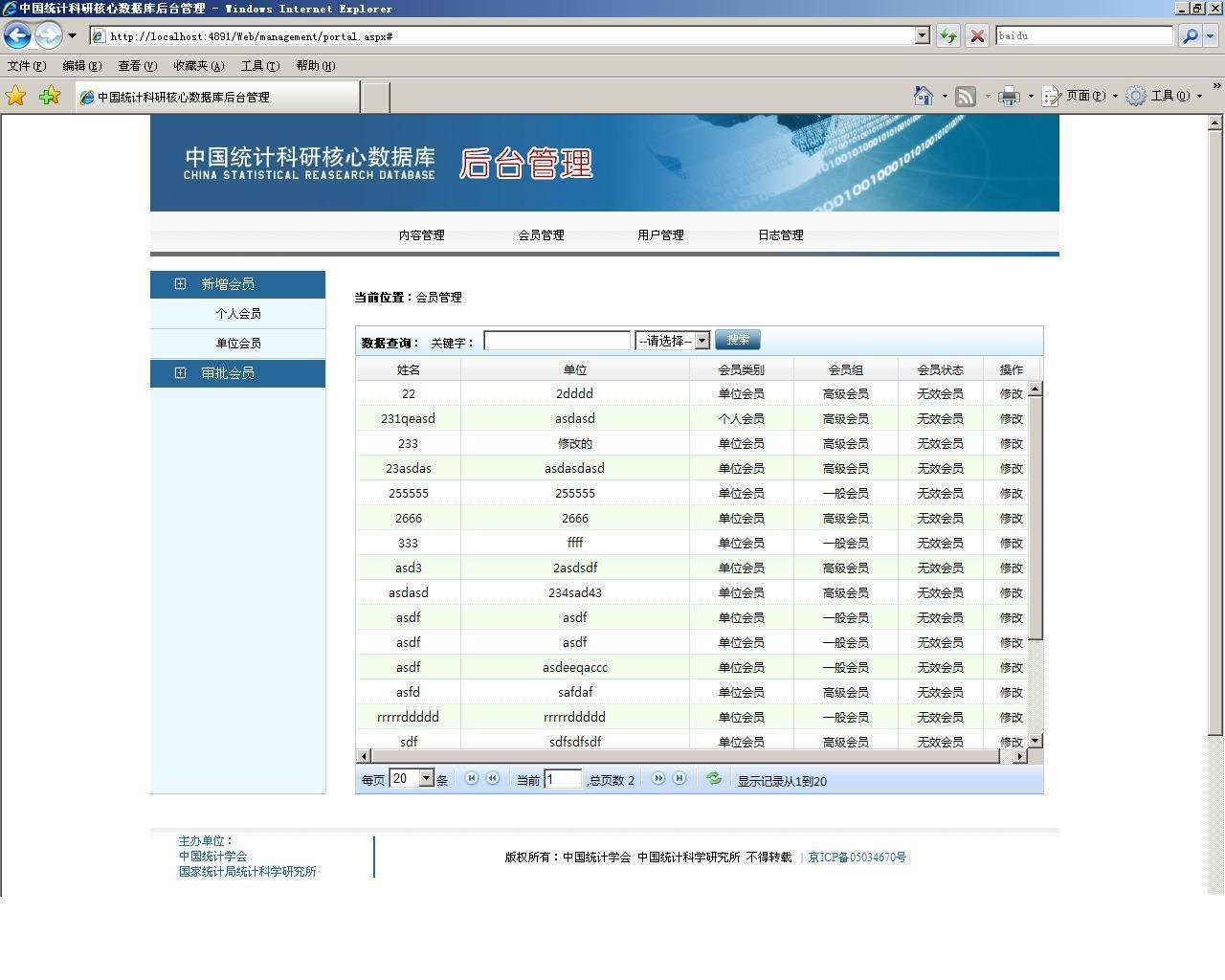
Identity had to be a first-class entity, not a text field. Author names on a paper are free text in most research systems, which means the same researcher appears in four spellings and their track record does not accumulate. We made researchers and institutions membership records, and linked projects, outputs and journal issues to those members. What that buys is the thing a research institute actually cares about: a person’s or an institution’s work over time — what they led, what was published, where it appeared — answerable as one view. It also turns a project database into something that can be opened to the outside world.
The two audiences are separated at the data layer, not the page layer. Internal users see work in progress, reviewer comments and unpublished results. The public portal sees only published output: the journal, the completed project abstracts, the member register. One database, two authorisation surfaces, and no draft content reachable from the public side by guessing a URL.
We also chose to keep the journal compilation inside the platform. Compiling an issue is selecting from the archive, ordering it, and freezing a citable snapshot — not re-collecting files from contributors. That is the difference between a publication process that takes days and one that takes a quarter.
What we built
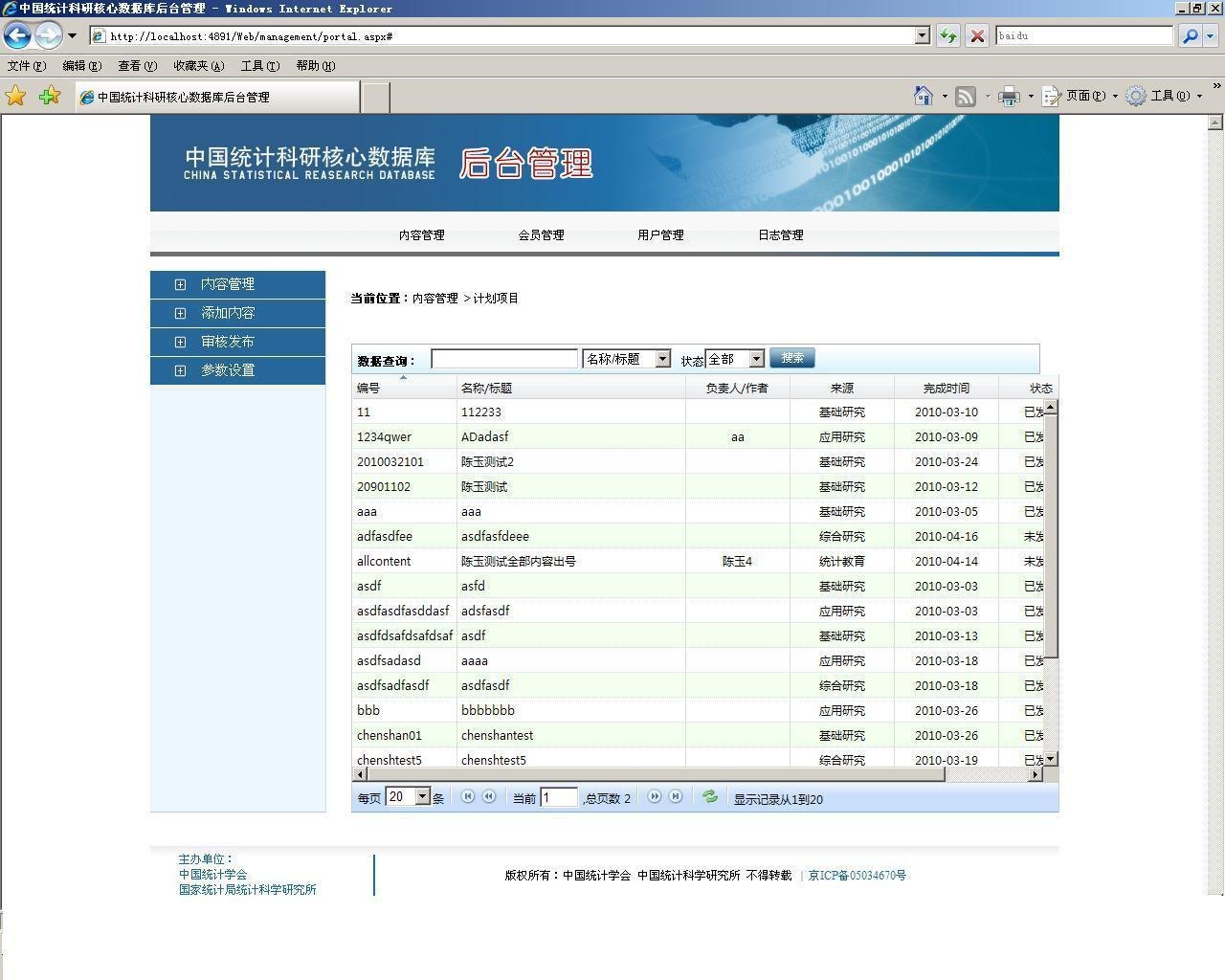
- Project lifecycle — commissioning and approval, mid-term inspection, completion review, result archiving, with the artefact required at each transition.
- Research journal — compilation of issues from archived outputs, with retrieval of historical material by author, institution, field and year.
- Member management — researchers and institutional members, with their project participation and publication history.
- Public portal — published results and journal content, open to external readers, kept strictly downstream of the publishing decision.
- Progress and output statistics — project counts and output counts by institution, field and period, for the institute’s own reporting.
- Attachment and version handling — multiple versions of a paper retained, with the published version marked, so a citation resolves to the version that was actually published.
Result
The review cycle runs in the platform: mid-term checks are recorded against the project rather than reconstructed from email, and completion review is the moment the output enters the archive. The journal is compiled from that archive, so the historical record grows as a by-product of doing the work rather than as a separate annual exercise.
The institute’s research base is now queryable by the people who need it — which outputs belong to which institution, what was produced in which field, what the programme funded over time. For an organisation whose output is evidence used in policy analysis, that retrieval capability is the point of the system; the workflow management is what pays for it.
The constraint worth naming: this is a platform whose value compounds slowly. Its quality is judged in year five, when someone searches for a study from a decade earlier and finds it. We built for that, which mostly meant being strict about a small number of rules that nobody enjoys enforcing at the time.
Technology
| Stack | B/S internal platform · Public web portal · MySQL · Role-based authorisation · Archive indexing and retrieval · Excel export |
|---|---|
| Delivery model | Private deployment, internal workflow plus public portal |
| Client | National Bureau of Statistics — statistical research institute |
| Status | Delivered |
What we cannot show
Unpublished research results, reviewer comments and institutional statistics are not shown. Screens are cropped to the project list and the member register; no research conclusions appear.
Similar problem?
If this looks like something you are dealing with — a legacy system that must keep running, a workflow no product covers, an integration nobody wants to touch — send a short description. We will tell you honestly whether we are the right team, and what the first two weeks would look like.