Platform & SaaS · 2026
Aegis Intelligence — multi-agent due diligence research
A multi-agent pipeline that turns a target company or industry into a structured intelligence report: task decomposition, multi-source retrieval, fact checking, BANT/MEDDICC scoring and an HTML report with sources attached.
The situation
Due diligence and pre-sales intelligence share a shape: a target company or industry, a list of questions (registration details, bids and tenders, litigation and sentiment, project history, buying intent), and a deadline measured in days. The work is search, cross-check, and write.
The failure mode is not a lack of information. It is a document that looks authoritative and cannot be traced. In a bid room or an investment committee, an unsourced claim is worse than a gap, because someone will repeat it.
Existing tools split the problem badly. Search engines return pages; report templates return structure. Neither returns a claim with its evidence attached, and neither shows how it got there.
The call we made
Decompose before searching. A single agent asked to research a company writes well and cites badly, because it decides what to look for while it is already looking. The pipeline starts with a task-decomposition agent that splits the requested enrichment items into ordered subtasks; each subtask goes to retrieval with its own question. It is slower per report and far easier to audit, which is the correct trade in this domain.
Fact checking is an agent, not a post-filter. Retrieval returns conflicting figures constantly — revenue from a registry, revenue from a press release, revenue from a job posting. A checking stage cross-validates sources and marks uncertainty in the output instead of averaging it away. A report that says two sources disagree is usable; one confident number is not.
Score on a framework the reader already uses. Output is scored and attributed against BANT and MEDDICC dimensions, so two targets are comparable and a reviewer can see which dimension is thin. A bespoke narrative per report cannot be compared, corrected, or taught to a new analyst.
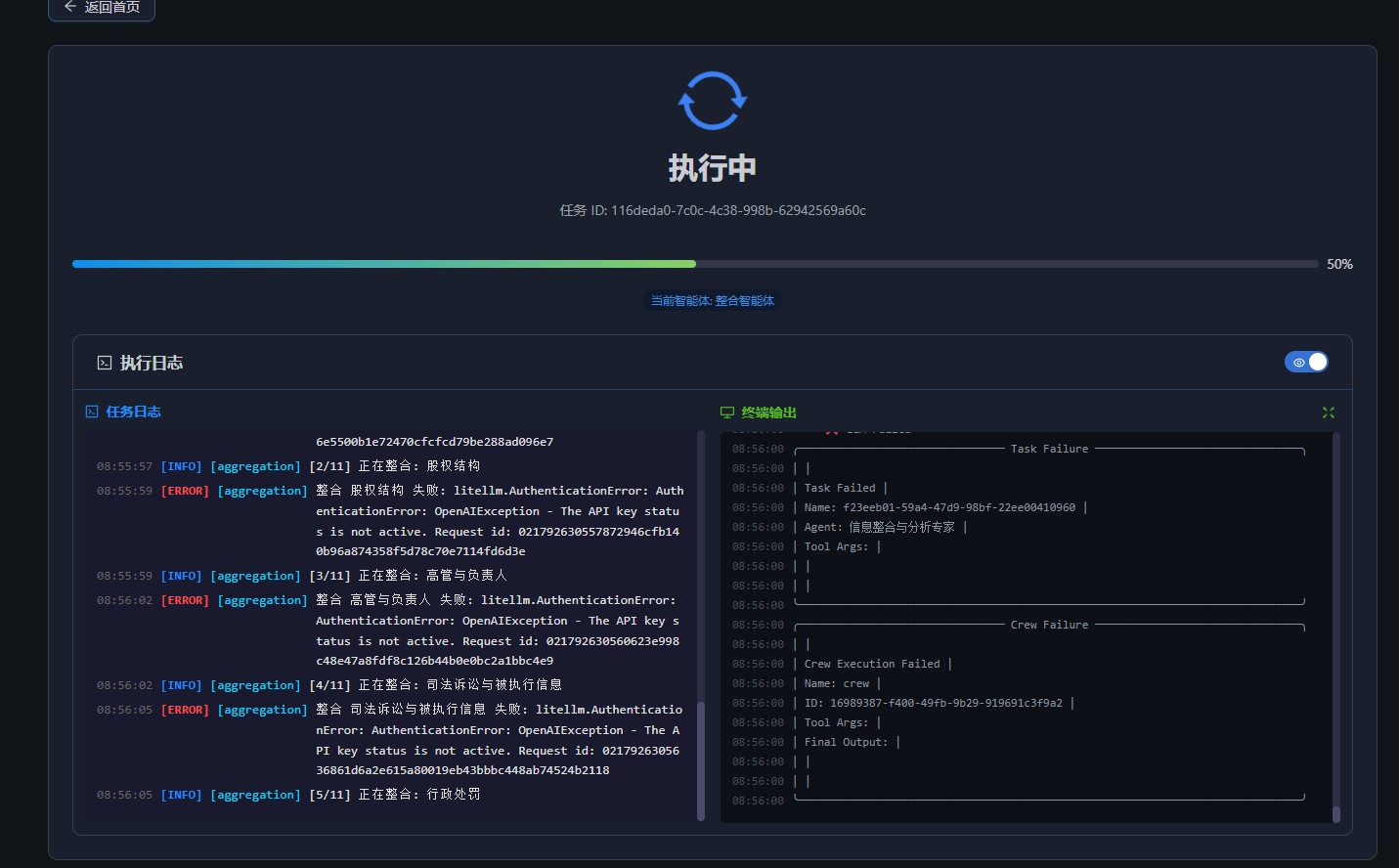
Make the run visible, not only the result. Reports stream over SSE, and task progress, task log and terminal output are visible while the chain executes. This is not a demo feature. When a chain produces a wrong report, the first question is where it went wrong, and if the run was not recorded the answer is that we do not know — which ends the conversation about trust. The same log is what makes the pipeline debuggable by someone who did not write it.
Keep a human gate before anything is treated as fact. Key conclusions support manual confirmation before being stored. This is the rule we apply to every AI deliverable: the system compresses the analyst’s search, it does not sign for them.
What we built
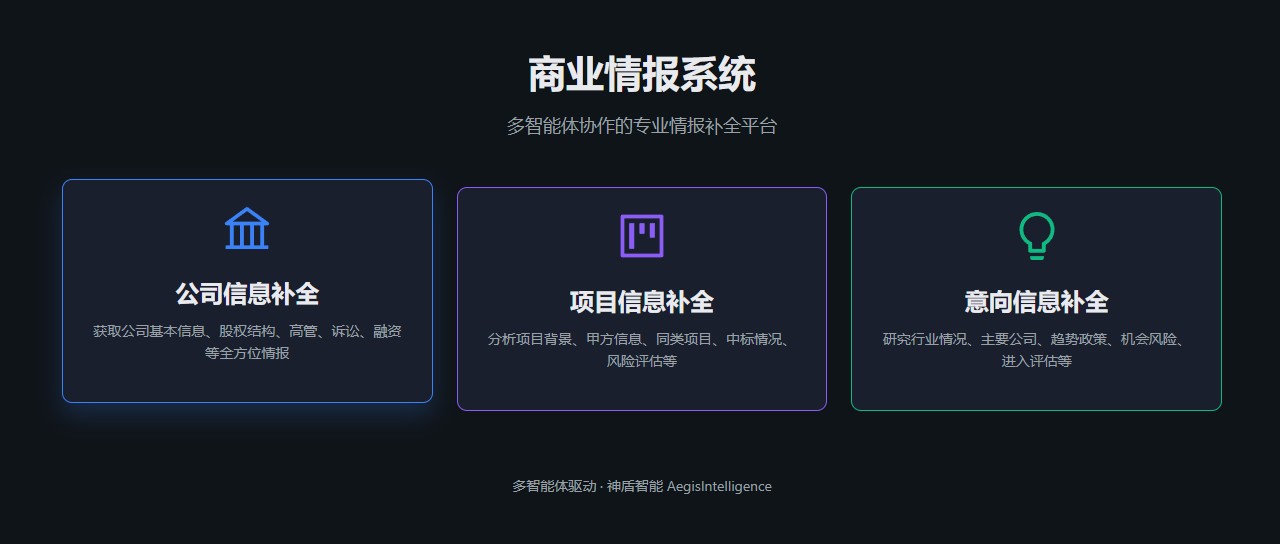
A five-stage pipeline behind three entry types:
- Task decomposition — the research goal is split into executable subtasks and ordered.
- Multi-source retrieval — registration records, tender and bid data, public sentiment, news and the official site, collected in parallel.
- Aggregation and verification — agent results merged, conflicts flagged, every claim carrying its source.
- Scoring — BANT and MEDDICC dimensions with attribution.
- Report generation — structured HTML with citations, exportable and shareable.
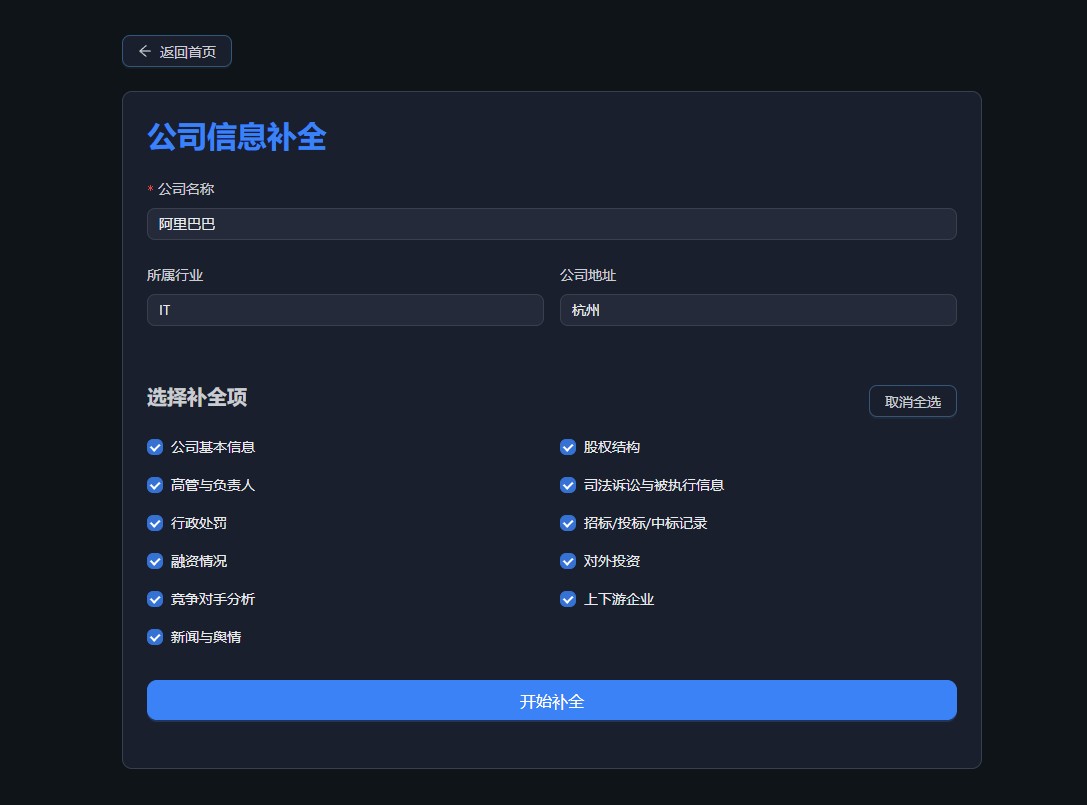
Around the pipeline: a console for the three enrichment entries, a request form that specifies the target and the items to complete, live execution view, and a run log retained for every report.
The orchestration is CrewAI; the service layer is FastAPI with a React client; the model layer is deliberately multi-vendor, because the useful models in this category change faster than an application should.
Result
Current status is an internal beta with the link running end to end and demonstrable. It has compressed the collection-and-drafting phase of a due diligence task and left a sourced trail behind it, which is the part that survives review.
What it does not do, stated plainly: it does not establish that a fact is true, it does not judge which finding matters for a specific deal, and it does not carry a delivery date. Coverage is three enrichment entry types, not every question a diligence process asks. Model cost per report is measured per run rather than averaged into a licence, because at this stage that number is what decides whether the product is viable.
The next work is not more agents. It is source coverage and the audit trail: a chain that can be checked is worth more than a chain that is broader.
Technology
| Stack | FastAPI · React · CrewAI · SSE · DeepSeek · Doubao |
|---|---|
| Delivery model | Internal beta, demonstrable end to end |
| Client | Internal product, piloted with pre-sales and consulting users |
| Status | MVP / pilot |
What we cannot show
This is an internal beta at MVP maturity, described by function. No client data appears in the screens; model outputs shown are generic examples.
Similar problem?
If this looks like something you are dealing with — a legacy system that must keep running, a workflow no product covers, an integration nobody wants to touch — send a short description. We will tell you honestly whether we are the right team, and what the first two weeks would look like.