Custom enterprise software · 2015
Adastra clinical patient management — desktop to web for UK urgent care
Moved Adastra, a clinical patient management system used by multi-disciplinary out-of-hours and urgent-care hubs, from desktop to the web — cutting deployment and training cost and adding a reporting layer that aggregates to county and national level.
The situation
Adastra is a clinical patient management system used by out-of-hours and urgent-care services in the UK — multi-disciplinary teams, wide-area hub cover, and a national health service context where software has to be both clinically safe and cheap to roll out. The product already worked. It was a mature desktop application with a long history, and the cost of being desktop-first was being paid in three places: deployment, training, and the ability to aggregate data upwards.
The client was not looking for a rewrite. They were looking for a way to extend a working system without destabilising it — which is a different and much more constrained brief.
The call we made
The obvious move — “replatform the whole thing” — was wrong. It would have turned a live clinical product into a multi-year construction project, which for a healthcare customer is an unacceptable risk profile.
Instead we split the work into three separable changes and shipped them in order:
- Web migration of the existing behaviour. Same workflows, same vocabulary, same clinical guardrails — re-implemented as a web application so that deployment stops being a per-site installation and training stops being a per-version exercise.
- A reporting module as a first-class deliverable, not a bolt-on. Care teams were already exporting data manually to argue for service changes; we made the arguments reproducible.
- Excel export as a deliberate escape hatch. Analysts will always want the raw rows. Fighting that instinct produces shadow spreadsheets; supporting it produces trust.
The judgement call that mattered: we treated the reporting layer as the reason for the migration, not an afterthought. A web version that only looked like the old version would have been a cost with no new capability.
What we built
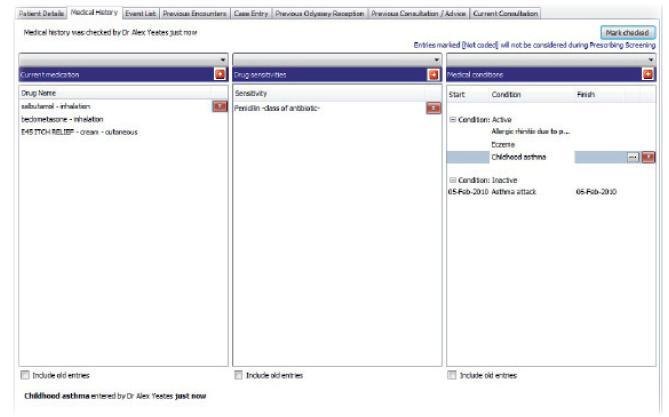
- Web application for out-of-hours and urgent-care patient management, covering the workflows the hubs actually run: case creation, triage, clinician assignment, outcome recording.
- Comprehensive reporting module supporting end-of-life care analysis and service improvement reviews — the questions commissioners ask, answerable from the system rather than from a spreadsheet someone maintains by hand.
- Excel export for statistical aggregation, with the aggregation able to roll up from individual service level to county and national level.
- Reduced training and implementation cost as a direct result of moving off per-machine deployment.
Result
The client’s own summary of the engagement:
“We are very happy to work together with Yeetech’s team, and we get really good ROI in the software outsourcing service!”
— Director, Advanced Health & Care (UK)
Concretely: implementation became faster because there was nothing to install; training became cheaper because everyone saw the same version; and the reporting capability moved the conversation from “what do we think happened” to “here are the numbers, by county”.
Why this is the case we show first
Because it is the least glamorous and most representative engagement we do: a working system that cannot be risked, a client who needs a specific capability rather than a transformation programme, and a delivery model that has to be right the first time because the domain is clinical.
If you have a system in that position — running, depended on, and expensive to change — that is exactly the conversation we are good at.
Technology
| Stack | Web application · Reporting module · Excel export · NHS care pathways |
|---|---|
| Delivery model | Offshore development + web migration |
| Client | Advanced Health & Care (UK) |
| Status | Delivered |
What we cannot show
Patient data never left the client infrastructure and no clinical screens beyond the anonymised view above are publishable. The reporting module is described by function only.
Similar problem?
If this looks like something you are dealing with — a legacy system that must keep running, a workflow no product covers, an integration nobody wants to touch — send a short description. We will tell you honestly whether we are the right team, and what the first two weeks would look like.